Showing posts with label Monday Papers. Show all posts

Tuesday, June 10, 2014

The Monday Papers: Part Ten


This is as is traditional, being posted a day late and I couldn't find an appropriate picture of an amusing animal, so you will have to forgive me.  We all have our off days. I rarely watch television this days, it's mainly a bonding experience with Mrs. Kinch. This isn't strictly true, I rarely watch television *as it is broadcast* on an actual television. I browse YouTube and I often come across things of interest there.

One of my recent discoveries is Forgotten Weapons, an occasional Youtube channel devoted to odd and unusual firearms, voiced by a curiously Canadian sounding chap.  I sort of assumed he was American, but they more I think about it, the more he sounds like he is from the Great White North.

The above video is one of the rare ones that doesn't feature that particular presenter, but it does feature a rather magnificent Girandoni Air Rifle.  This weapon produced in 1780 for the ReichesArmee in the Austro Hungarian Empire. It was an extraordinary weapon in .46 calibre, equipped with a 20 round tubular magazine and was capable of firing thirty rounds from one compressed air reservoir.   Too delicate and complicated for military service, it was used by the Lewis & Clarke expedition during their trek across North America.


A bit of a set to in the Sikh Golden Temple

You can read more the context of this particular scrap here, but bear in mind twelve people were injured.  It seems an extraordinarily low number considering the amount of chaps running around with swords, but given rapid access to modern medical care perhaps it isn't so extraordinary.   I can only hope that if the Mothers Union ever kick off in Saint Patrick's that we will be able to keep the casualty roll so low. 

I've only witnessed one sword fight that was actually in earnest and curiously enough this has a lot in common with it. 

- There was lots of running about before either side actually came to blows. 
- Strikes when they were made were extremely fast.
- Little attempt was made to maintain a guard of any sort. 

Another thing that struck me about the swordsmen in this video is that most of them carried their weapon on their shoulder, loaded to deliver a strike like a club rather than maintaining a guard. I have seen that posture in Sikh swordplay before, but that mainly where the fighter was carrying a shield in his off hand. 


A somewhat more staid affair was the last duel in France, which occurred in 1967.  The combatants were two French politicians, one of whom had insulted their other. The duel was fought to second blood only, as one of the combatants was getting married the following day. It seems a rather more studied matter than the melee above.

I must admit I have always been fascinated by duelling and would have rather liked to have partaken, should circumstances allow.  Thus far unfortunately, my reconcontres have been rather more extemporised affairs and have little of the Code Duello in them. The code proposed by the Clonmel Assizes of 1777 is I think one of Ireland's greatest contributions to world culture - with the possible exception of triple distilling in whiskey.

A relatively recent calling out in Drogheda came to nothing sadly, which would seem to suggest that its time has passed, but one can still hope.

Monday, July 22, 2013

The Monday Papers: Part Nine


Major Hutton, one of the fathers of 
historical fencing as we understand it today.  

I enjoy fencing and regret that I no longer have the time to devote to it that I used to. I have no particular interest in Olypmic fencing, which always seems to me to resemble nothing so much as a high speed game of tag, but historical fencing interests me greatly. I remember having a conversation with a friend who asked me why I studied something so idiotic.  His point was that given that I was unlikely to compete as a sportsman (as it wasn't Olympic fencing) and that my chances of ever having to participate in a real sword fight were slim; I appeared to be wasting my time.

I think the thing is beautiful and worthwhile in and of itself.

Before men like Major Alfred Hutton took an interest, theatrical fencing was usually conducted with rebated foils regardless of period - it was in the late 19th century that he introduced historical fencing to the stage.  I particularly commend his book "Cold Steel: A practical treatise on the sabre" to your attention.

It must be remembered that sword are killing instruments and were the subject of considerable debate amongst professional soldiers. The sword as a cavalryman's weapon probably reached it's zenith with the advent of the 1908 Pattern.   The debate centred around whether it was better to engage with the point or the edge. I'm agnostic on the matter, as it assumes that there is only correct answer, while in actuality both have their purpose.  Which is "better" is really more a function of terrain, position and the nature of engagement than any inherent virtue.

I suppose my interest in fencing was first kindled by seeing the wonderful sequence between Errol Flynn and Basil Rathbone in The Adventures of Robin Hood.  It was heady stuff to a boy of nine and the base it laid was further strengthened by the masterful work of Bob Anderson in The Princess Bride. 

Oh to be a beau sabreur!


I can pretty much guarantee that this chap is not a Krav Maga enthusiast

I've drifted in and out of martial arts and if I've learned anything, it's that there is a large element of PT Barnum in the advertising of whatever chop sockey mucking about one is taking an interest in.  Fashion is also a concern - kicking things was all the rage in the 1980s, ground fighting was the new, new thing some years ago and combatives or "reality based fighting" is its successor.

I was asked by a friend of mine, who was the victim of an assault, if he should take up martial arts in order to prevent it happening again. It's a loaded question - my friend belongs to a group likely to be assaulted (he's a male in his early twenties) and it's been a traumatic experience for him, a chap who hadn't been involved in fisticuffs since school.

I would respectfully suggest that unless you actually enjoy martial arts as a hobby - regular training is probably not worth it as it is unlikely to benefit you significantly in terms of self defence and there are far more efficient ways of getting fit. The vast majority of martial arts are geared toward the sporting arena. There is no shame in that.  It's foolish to criticise a fork for not being a spoon.  Some of the fittest men I know are boxers or ju-jitsu enthusiasts, but the thing itself and not some abstract sense of security is the reward.

There are no guarantees in this life, but I would argue that the majority of people whose business does not bring them into conflict with others are unlikely to be involved in fisticuffs.  It is a black swan event and most likely the engagement will be over before it's begun because the aggressor has size, aggression, terrain and surprise on his side.  That said, a little knowledge is useful. I did a Krav Maga course a couple of years ago and found it very helpful.

Krav Maga is an Israeli fighting system. There's a story behind it - but that's not particularly relevant.  It is rather brutal and at its worst involves more than enough eye gouging, ear tearing and biting to land anyone in the dock. But, while KM is notorious for it's no holds barred approach, the basics mostly revolve around how to escape from confrontation, break holds and a couple of strikes that should dissuade those attackers who are in search of easy prey rather than an actual fight.  For the average person that almost certainly more than they will ever need.  One of the key skills taught is how to recognise a dangerous situation and retreat from it and while I've certainly never used any of the eye gouging or associated horrors, the situational awareness was to me worth the price of entry alone.

A single two day course will cover a great deal of what KM has to offer and it is very unlikely that the average Joe will ever require any more than that.


I'm fascinated by the law. Even if you personally never come in contact with the courts, they will shape your actions, your daily life and the social mores of those around you.  And yet the law itself, for all it's being laid down in black and white is often subject to interpretation and debate.

The other point about the law is that it is vast and ones knowledge of it is rarely as good as one thinks it is. I regularly have to scurry off to http://www.irishstatutebook.ie/ to check things that I'm relatively sure of, but just want to double check.  A knowledge of the law can inform one as a citizen and can often help resolve issues before they arise and I would urge anyone to who has any interest at all to look up the relevant wikipedia article for their country and spend fifteen minutes on it, if only to learn the difference between Civil and Criminal Law.

It would appear that there are people who share my enthusiasm for the law and who take a particularly active interest in it and its interpretation.  I have only met one of these gentry in person and his legal theories had a great deal to do with the Magna Carta and the Bill of Rights of 1688/9.  I can genuinely say I was enriched by the experience. Sadly, I do not believe he felt the same.

I respectfully suggest that anyone with an interest in the law could profit by reading this article, which I put forward with no comment other than a excerpt from an opinion written by Chief Justice John D. Rooke of Canada.

Note: The acronym OCPA stands for Organised Pseudo-legal Commercial Arguments.

"The bluntly idiotic substance of Mr. Mead’s argument explains the unnecessarily complicated manner in which it was presented. OPCA arguments are never sold to their customers as simple ideas, but instead are byzantine schemes which more closely resemble the plot of a dark fantasy novel than anything else. Latin maxims and powerful sounding language are often used. Documents are often ornamented with many strange marking and seals. Litigants engage in peculiar, ritual‑like in court conduct. All these features appear necessary for gurus to market OPCA schemes to their often desperate, ill‑informed, mentally disturbed, or legally abusive customers. This is crucial to understand the non-substance of any OPCA concept or strategy. The story and process of a OPCA scheme is not intended to impress or convince the Courts, but rather to impress the guru’s customer."

And now pardon gentles all, I must be off.

Edit: And for those readers from Great Britain & the Commonwealth, Mrs. Kinch and I wish you joy of your new Prince.

Monday, July 15, 2013

Monday Papers: Part the Eighth


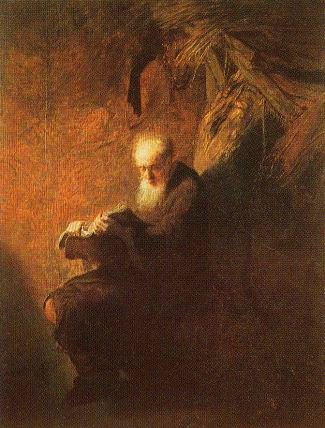
Philosopher Reading by Rembrandt 


It's been a while since I written one of these, it seems silly to post them on a day other than Monday and I just haven't had the time to prepare one in advance.  That and I suppose I haven't seen things that stuck me as worthy of your attention. 


"Play the argument, not the man."

Lloyd again - this is something that is I often find myself struggling with. I'll freely admit there are people I don't listen to because of who they are or because of the political party they belong to. It's a habit I'm trying to break. While I certainly acknowledge the fact that private persons are under no obligation to give anyone a hearing, it's probably a good idea if they do.

That said, there are only so many hours in the day.  I believe I will be honouring this one in the breach more often than not - but I will be trying.  I suppose I think of this a bit more often because I seem to find myself holding the minority opinion in my social circle.  It does I suppose, concentrate your mind wonderfully and force you to think through your own positions in greater depth. Curiously enough I don't think it leads to this sort of carry on.

Going back to the ad hominem attack, it is similar to the trend to substitute biography for literary criticism. The work is no longer discussed because the critic is more interested in discussing the life of author.


"Po-tay-ooo"

I normally try to use these posts to bring worthy things to your attention.  This may not be worthy - but it is hilarious. I've been giggling and humming "potato-na" to myself for days.  The gibberish language is apparently a mixture of English and French, but as Franglish goes it's rather good.

Jolly Old Saint Nick

It seems crazy to be talking about Christmas given the heat we're having - but Ian has decided to cast a broad net this year and the call for subscribers to the Wargamers Secret Santa has begun. I really enjoyed this last year and will be looking forward to it this year. You can find the rest of the details here.


Dr. Édouard de Pomiane

Dr. Édouard de Pomiane was a French scientist of Polish extraction.  I discovered his book "Cooking with Pomaine" last year while on holiday. I am a very poor cook - but I've taken to Pomaine in a way that I didn't expect. Mrs Kinch is an excellent cook and somewhat daunting to have around when you're a beginner. I've found that the best way to approach the problem is to simply present her with a fait accompli; prepare a meal before she has a chance to venture an opinion or advice, which generally leads to her taking over proceedings.

You can find a short TV series taking in some of the sample menus from his "French Cooking in Ten Minutes " here. 

I cannot recommend this chap enough.

Tuesday, June 4, 2013

The Monday Papers: Part the Sixth

Girl reading a letter by Vermeer

Tick Tock 

I have always been fascinated by time - the sheer depth of Creation has a majesty that is almost intoxicating.   Recorded human history stretches back approximately 6,500 years, while the Earth itself is vastly older. But considering human history measured in generations, rather than years, there are only two hundred and ninety  generations between us and the men that lived in Sumer.  The past is both near and far away simultaneously, utterly remote and yet always with us.  Considering Creation as all things that are, we are very young indeed, sharks for example have been about for nearly four hundred million years and that is quite a few generations indeed.

Fiction rarely conveys the breadth of time well, but there have been some notable exceptions. I read "The First and Last Men" by Olaf Stapledon, a future history of the human race in secondary school and was very impressed with it.  I'm less impressed by the philosophy these days, which is bleak enough, but it is still a considerable literary achievement in that it manages to communicate the astonishing depth of time and the transience of the individual.  It is a fine book and well worth reading.


On Exactitude in Science

I've always been interested in maps - I think spurred by my father. He received a gift of an etching when I was very small called "Map of a city found in a dragon flies wing".  It was a map of an imaginary city in the style of the Roque maps of London and Dublin, but with each house formed from one of the cells of the wing.  Dad told me there was a house on fire in the city. Despite many hours of careful study, I have yet to find it. I still check whenever I visit the parental home.

The Strange Maps blog is a treasure trove of similar maps, maps that have never been, maps that show unusual things, like the consumption of icecream in the United States or the optimal borders of Poland. If geography is destiny and we are shaped by the environment we inhabit and the environment we imagine we inhabit, you could do a lot worse than visiting the Strange Maps blog. 


Far from the Mahdist crowd

I've been taking a more than usual interest in the British Empire of the 19th century over the last week. This was almost certainly spurred by playing "The Sword and the Flame" and is likely to continue for a while. This happens every so often, usually after I've reread some H. Rider Haggard, an author I am hugely fond of and who was one of the great storytellers in a time blessed with a superfluity of them.

However, rather than re-read "She" again - I came to read "The River War" by Sir. Winston Churchill. It isn't my first time reading it, but as an example of well written narrative history it is hard to beat and it repays study. Churchill may have been an egotist, but he was also a stylist and the sheer brio of his prose never fails to engross me.  The Dover edition is a good one, but if you can't wait to get to a book shop, the always fine Mark Smith of Simpsonville, North Carolina has recorded a free audio edition.


Monday, May 27, 2013

The Monday Papers: Part the Fifth

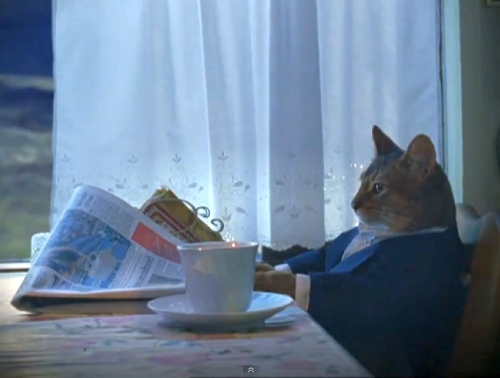
Cat reading Newspaper by Chris Scalf
Thieved from here.


The Men who would be King

Wargaming it should come as no surprise to anyone who reads this blog is my favourite pastime. There is a great deal to recommend it, the extensive preparation, the considerable expense and the rock and roll lifestyle most of all. However, every so often one comes across a group who changes how one views the hobby and in a small way how you view life. Major General Tremorden Rederring's Colonial-Era Wargames page is a wonderful example of that. A collection of battle reports, how to articles and opinion pieces written by a group of friends who've used wargaming as a way of spending time together, keeping in touch and having a wonderful time.  I'm sure other pastimes have their consolations - but if I ever had to sum up the attractions of what I do for fun up in a single webpage, this is the one.

This link is to archive.org and is of a cached version of the site. The Ouargistan Group aren't updating it at the moment for a variety of reasons, but I have it on good authority that it will be migrating to new webhosting shortly and that the band is still together.  To think of the fun they had.


Working Nine to Five

As someone who came to his calling late, I am often fascinated by why certain individuals end up in certain occupations.  There are myriad reasons and they are often wildly divorced from what you might think.  My own father, who was an extremely gifted teacher only became one because of a chance conversation in a pub. The avenue that he took simply isn't open any more, he was offered a job in the pub on Friday and started on Monday. One has to be much more deliberate these days.  But if he hadn't been working in that bar at the time, I could easily have born in a different country and under very different circumstances.

I often meet people that do jobs that I simply wouldn't be capable of, the palliative care nurses in the local children's hospital spring to mind - they are women whose courage and endurance are humbling.

Dan Ariely is an Israeli chap who delivers this brief piece on why people work with his usual charm and rigour. It is well worth watching.


A Little Knowledge

Capability Savage has a line that I've grown very fond of.

"I don't understand it - therefore it must be easy."

This particular idea is usually trotted out when Savage, a Graphic Designer, is told by a would be client that his son/nephew/cousin has Microsoft Office on his computer and that Young Johnny can put the webpage/flier/poster together.  In this age of instant information, we seem to forget that skills are more than a simple collection of information, but the product of knowledge, hard work, experience and ability.

I am often fascinated by specialists and craftsmen. My father inculcated a respect for craft in me at a young age and it has never left. Most skills have certain  rules that are bread and butter to practitioners and a revelation to laymen.  I'm always a little giddy when I learn one; it's no substitute for actual skill, but it does give one a little window into a different world and that is always interesting.

For those of us who try to tell stories with pictures, this snippet of information might be worth knowing when trying to compose or frame photographs.


Monday, May 6, 2013

Monday Papers: Part the Fouth


Resurrection Men

 "Resurrection Man" is an obsolete term now, thank God, but it is still one that interests me. I first heard it when my father described the Robert Louis Stephenson story "The Body Snatcher".  My father and I have a particular affinity for Stephenson which coalesced mainly over Treasure Island which was a particular favourite.  We both still maintain that all really great books contain a map.

I recall in my mid twenties, the particularly shocking moment, when Dad having told me that it was time for me to inherit his collection of Stephenson's, brought me down to the library that he kept in the basement and we discovered that it had been burgled.

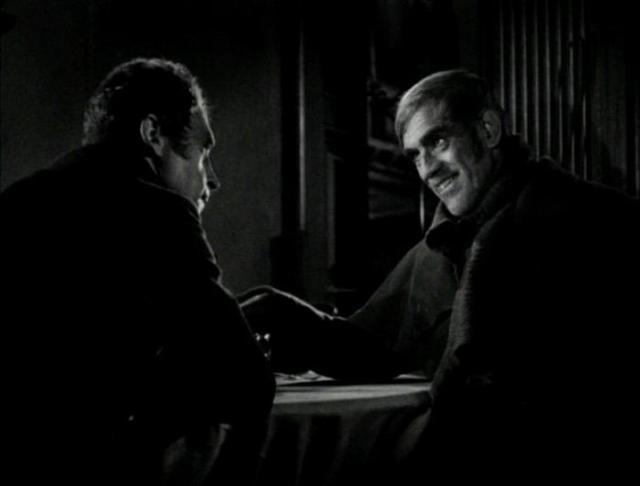
Boris Karloff as the eponymous Body Snatcher


I have slowly begun to reconstitute that library which has been a wonderful opportunity to re-read those Stephenson's that I had forgotten. Re-reading "The Bodysnatcher" brought a classic horror film to mind. Boris Karloff is often only remembered today for his portrayal of Frankenstein's monster, but I think his performance in this RKO classic is as fine a thing as you could find.  A compelling testament to the power of pure acting ability.

It has occurred to me that being an archaic term, Resurrection Man requires some explanation. In the early 19th century, there was a serious shortfall in the number of cadavers required for medical training and no legal way for medical schools to get their hands on bodies for the teaching of anatomy. As a result, there grew up an illicit trade in body snatching, where grave robbers or "resurrection men" as they were known would steal bodies to supply the medical schools.

Two Irishmen, Burke and Hare, are the most famous examples of the breed - though to be fair they were not representative. Grave robbing was a comparatively minor crime at the time and Burke and Hare decided to cut out the middleman and began to indulge in a spot of murder, sixteen in total, to supply their customers.

Resurrection Man is also the name of a powerful novel by Irish crime writer Eoin McNamee about the Shankhill Butchers, a particularly nasty chapter in our history. McNamee is a fine writer and his prose has a sort of hallucinatory clarity that I always find compelling. He's written several other books of Irish crime and is well worth tracking down.


May the Fourth be with you. 

There's been something of a celebration of Star Wars online over the last few days which is no bad thing.   I rather like Star Wars, at least the first three films. They have a bravura and sense of old fashioned story telling that is completely lacking in the second three.  I think the problem with the second set of films is that they set out to be good Star Wars films rather than good films or even good science fiction films. There comes about where the entire enterprise becomes so self referential as to be completely pointless.


What is definitely lacking is the edge present in the great Space Opera that inspired the films.  The "planetary romance" has a bit of a bad name in science fiction circles, but I think that there is a lot of fine work in that field and none better than that of Catherine Lucille Moore.  CL Moore wrote some of the finest science fiction that I have ever read and some of her best tales concern Northwest Smith, a Sam Spade of the Spaceways, who slouches through a Burroughsian Solar System with a heat ray on his hip.

Probably the best known of her stories is Shambleau, which isn't available online, so you will have to track a hard copy down.  This is high quality story telling in the old style, told with a lightness of touch and eye for human folly that leaves it as sharp and surprising as it was when it was first written.


Tradition


The Phoenix Park Murders

Terry Eagleton is an odd fish, I often disagree with him, but his concision and most of all his humour would make it a sin to deny him a hearing.  I read him recently and came across the following passage, which I rather liked.

"The Kantian imperative to have the courage to think for oneself has involved a contemptuous disregard for the resources of tradition and an infantile view of authority as inherently oppressive."

There's quite a bit to be said for that approach to my mind, but today I observed a tradition that is a little odd. It's not a tradition of my family, but rather of Mrs. Kinch's.  On the the sixth of May 1882, an ancestor of Mrs Kinch's was working in the Vice Regal Lodge in the Phoenix Park, when a group of men known as "The Invincibles" attacked Lord Frederick Cavendish and Thomas Burke, slashing both men to death with surgical blades.   Burke was the intended target of the attack and the attackers were eventually caught and convicted, through the work of Superintendent John Mallon, and several were hung.

Mrs Kinch's ancestor observed the aftermath and helped carry the bodies inside.  Curiously enough, he then returned to the site and cut a small cross into the turf and marked it with a flower that he had taken from the lodge. On the anniversary each year a member of the family returns (I suspect a few have been missed) and places a flower on the spot.

This year, I have been deputised.


Flowers from Mrs. Kinch's Garden

There is official site marked with a small cross of white stones, but family legend places the actual site some distance from there. I sloped up to the Park and paid my respects to Lord Cavendish and Mr. Burke this afternoon.


Monday, April 29, 2013

The Monday Papers: Part Three

Lady reading the paper with her cat 
 woodblock print, ca. 1800s 
 Utagawa Kuniyoshi


Portrait of the YouTuber in a very fetching hat

I've been reading Nikolas Lloyd for simply years, almost ten years now that I think of it. He first came to my attention because of his website devoted to the wargame Crossfire, which I don't play anymore. But if I came for the wargaming, I stayed for everything else. Lloyd is a chap whose heart is definitely in the wrong place and I disagree with him almost as often as I agree, but he writes well and maintains a YouTube channel on such varied subjects as Ancient & Medieval Weapons, Swing Dancing, Film, Psychology and general observations on life.  His videos are brief, entertaining and well worth watching, I urge you to pay him some attention. 

You'll find his website here

Some of my favourites from his YouTube channel. 

We hate the them that are almost us. 
Some points about arrows. 

Collated by theme.

Weapons & Armour
General Chat
Dance Videos

Really rather good

To be honest, I don't know much about Melvyn Bragg except that he wrote "The Hired Man", a musical of which Mrs. Kinch is exceedingly fond.  I am less fond it, though it's not without it's charms.  However, when he is not visiting the terpsichorean muse upon an unsuspecting public, he presents a show on BBC Radio 4 called "In our Time".  

I must confess that Uber brought this to my attention and I've been absolutely hooked ever since. It's billed as a discussion of the history of ideas, but each episode is essentially a team of experts holding forth on a topic for forty minutes, with Mr. Bragg playing the part of an educated layman who asks a series of questions to draw out the boffins.

I haven't listened to a bad one yet and I was going to write some recommendations, but actually - I recommend the lot unreservedly. If you fancy spending forty minutes (and they are all forty minutes long, brevity is the soul of wit) learning about something about which you know nothing, this is the place to go. Top notch.


The Choir of Ely Cathedral sing "Now the Green Blade riseth". 

For a variety of reasons, things at Chateau Kinch have not been exactly plain sailing of late, Mrs Kinch's health being a major concern amongst other things.  However, we had the very great pleasure of attending the christening on Saturday of Clare, the sister of Kathryn, the little girl whose death inspired the Boyne Walk that Du Gourmand and I embarked upon.  The turn out was great and we had a wonderful time enjoying the hospitality afterwards, I only regret that an impending night shift preventing me from staying longer. 

Mrs Kinch levered me out of bed this afternoon after the night shift in question and we trooped off to evensong where we heard the above hymn, which neither of us were familiar with. It's a beautiful piece about life, resurrection and imperishable quality of love. 

I hope you enjoy it, it brought all the joyful, hopeful and uplifting feelings of the previous day flooding back.  Apparently the melody is an old French peasant song, but as that arch cynic Noel Coward wrote in Private Lives. 

"Extraordinary how potent cheap music is."


Tuesday, April 23, 2013

The Monday Papers

Portrait of the author as a young dog

I almost forgot to write this today as I had other things to do - but actually publishing this on Tuesday appears to be something of a Joy & Forgetfulness tradition.


Podcasts from the National Archives

The web is full of hidden riches and there are plenty of good things out there. I was directed to this by chum and all round good egg UberAlex.  The National Archives in the UK have a large number of podcasts available for download on a wide variety of subjects. You can find them here.

Of particular interest to readers of Joy & Forgetfulness are;

Anthony Beevor on Stalingrad
Ben McIntyre on Spying during the Second World War 
Ralph Thompson on The Post-Restoration Army 


Pen & Paper

I love paper and pens. My father is a calligrapher and while my penmanship will never be as good as his; I respect the craft. Professionally, the ability to make clear, readable notes has been invaluable - but I think perhaps one of the many gifts my father gave me was a appreciation of the care and attention required for the correct forming of letters.   I am in my way, a very 21st century man, I use 21st century tools and live a life that is only made possible for information technology that has cropped up in the last twenty years. That said, I compose most of my prose long hand, I keep a prayer notebook* and I write and receive letters.

Composing with a pen and paper enforces a certain discipline that doesn't come from typing on a keyboard. Much like life, you can't erase your mistakes and that brings with the necessity to stop, to think and to compose. This chap seems to agree with me. 

Try writing a letter or two. You might surprise yourself.


A Terrible Old Man

The Unlikely Douglas McKenzie in addition to being a man much given to puns, has a gift for the spoken world. He is a rather good reader and has been taking part in a project to read or create dramatic recordings of the public domain works of H.P. Lovecraft.

You can hear his recording of "Dagon" here.


*If you can achieve the syllabic balance desirable in an Anglican collect in your head, I will show you a cleverer man than I.

Tuesday, April 16, 2013

The Monday Papers: Part Two


Have you see this woman? 


I meant to do this last night, but circumstances intervened. Mrs Kinch hasn't been very well of late and has been back and forth to the doctor with a particularly nasty infection. Unfortunately, she had an allergic reaction to her antibiotics last night and began to develop difficulty breathing. It's all been sorted out, but it did involve a romantic several hours in Casualty (worst datenight ever).  I'm currently investigating the possibilities of investing in Evil Gypsy Curse Insurance(1) as it seems that Mrs Kinch just can't seem to catch a break at the moment. 

That said, whatever tendency one might have to feel sorry for oneself, the events in Boston certainly put things in perspective. God be with them all. 


Reading the newspaper by Fyodor Bronnikov

But, how and ever, on to the papers....

Podcast: Ken & Robin talk about stuff

Ken Hite is a Lovecraftian scholar, Fortean, game designer, writer, raconteur and all round good egg.  Robin Laws is a game designer, writer and other all round good egg (though he does have some rather odd ideas about hot cross buns). Every week they get together and record "Ken & Robin Talk about stuff", a magazine style podcast that never lasts much more than an hour.  I find this the ideal length for a podcast (sorry Meeples & Miniatures and View from the Verandah) as it means that I actually get to listen to the whole damn thing.  Topics under discussion have included roleplaying game theory, cinema, probably the best discussion of the 2012 US Presidential election I've heard before or since, the Volstead Act of 1919, Blackwater and the CIA, occultism, 17th century French Satanism, the politics of Toronto and Joseph Stalin. I can't recommend this podcast enough, I don't generally listen to anything that encompasses politics, but Ken and Robin are adult enough to have a discussion that doesn't end in name calling and it's made all the better by the fact that Robin is a slovenly liberal (or Canadian, which is fundamentally the same thing) while Ken is a American Republican with some decidedly iffy ideas on Constitutional Monarchy.


Death & Photography

I make a great noise about not caring for the 21st century much, but there are advantages - mainly that I am about to grouse about it.  As a man who spent a great deal of his childhood being seriously ill in one way or the other, it is quite likely that in an earlier age I would not survived to amuse you with jokes about French Marshalls batons or pictures of my cat.

Do not try this at home. Sissi is a trained stunt cat.

As I get older the more I admire our 19th century forebears. They lived tough lives and experienced death and hardship daily in a a way that we don't understand. If we have healthier attitudes to sex than they did (and I'm not so sure of that), we definitely are less capable than they are of dealing with death well.  I've seen rather more death than I'd like in the last few years, both personally and professionally, and I've come to the conclusion that we've lost the knack.  In a way we are the victim of our own success, we see death so seldom.

Photography in the mid 19th century was difficult and expensive and most people would only have a few. Consequently, children who did not survive infancy were often only photographed after death. These are hard pictures to look at - but instructive I think, the only surviving image a parent would have of a lost child.

You can see them here.


The pure joy of Keely Smith


After that sombre note - Louis Prima needs hardly an introduction. If however, you have been living in some sort of cultural waste land, you will recognise his magnificent voice from King Louis ("The King of the Swingers") in Disney's The Jungle Book if nothing else.

Less well known, and undeservedly so, is the beautiful Keely Smith, who was Prima's frequent collaborator and played the straight girl to his antics.  She is still performing at the ripe old age of -ahem- and is as good as ever. You owe it to yourself to hear her. 


(1) My apologies - Itinerant Person of Different Moral Outlook Insurance.

Tuesday, March 26, 2013

The Monday Papers: Part One


Portrait of a man reading by Rembrandt

One of the problems of the Internet is that there is quite a lot of it and despite being quite a conservative soul, I'm fond of it.

I must say that having a considerable portion of the knowledge of Mankind accessible via a machine that fits in my pocket is probably one of the more exhilarating aspects of life in a 21st century that has proved relatively disappointing thus far.

However, the flood of text and ideas is such that separating the wheat from the chaff can prove problematical. With that in mind, I'm hoping to start a set of regular post highlighting things about the Internet that I have found interesting or useful. There will be some wargaming content, but there will be other stuff also - I hope at least some of it proves of interest. 

Doctor Alexander O'Connor is a friend, a loyal opponent and thoroughly good company. He is also considerably cleverer than I am, though I flatter myself that I have better jokes. His blog features a similar weekly round up, which is where I stole the idea from. He runs rather more to technology and philosophy than I do - but he is worth reading. You can find his Weekend Reading here.  

Polemarch is an odd fellow and I think the first post-modern wargamer that I have encountered. He is very similar to Doctor O'Connor in some ways in that he never fails to make me think.  He is what Chesterton describes as a fellow with his heart in the wrong place - I am struggling to think of a single occasion where we have agreed. That he is wrong is clear, at least to me, but that he continues to be wrong in such an engaging and well written fashion is the reason I never fail to read him carefully and with attention. You can find the Polemarch here


"Then none was for a party; then all were for the state; 
Then the great man helped the poor, and the poor man loved the great. 
Then lands were fairly portioned; then spoils were fairly sold: 
The Romans were like brothers in the brave days of old. 

Now Roman is to Roman more hateful than a foe, 
And the Tribunes beard the high, and the Fathers grind the low. 
As we wax hot in faction, in battle we wax cold: 
Wherefore men fight not as they fought in the brave days of old."


Horatius - Lord Thomas Babbington Macaulay

I discovered Babbington-Macaulay late in life and I have been doing my best to rectify this serious omission ever since. Read Horatius, it's a long story poem of the sort they don't write any more and it thumps along like the heartbeat of the messenger bringing you the story in person.  I read it two year ago and it squirreled it's way in to my heart like no-one has since Joyce Kilmer. There may be better poetry out there, but I don't remember it.

His "History of England from the Accession of James the Second" may be Whiggish, partial and thoroughly dated. It is still however a skilfully written account of human drama, a story that encompasses the low as well as the high in time when history was mainly an account of the doings of Monarchs and Princes.  I've read plenty of history that informs, but Macaulay makes the period live through the beauty of his prose and his eye, and sympathy for, the frailty of persons.  I've yet to find a decent print edition, but if you're looking for an introduction, you can read him here.

Failing that there is an audiobook version produced by the volunteers over at Librivox. The quality of the readers varies, but this link has a lot more good than bad and will certainly give you enough to know if you've a taste for more.